Agrotextiles - which one should you choose

What are the differences between different weights of agrotextiles and which one should you choose?
The weight of an agrotextile determines the density of its weave, which directly translates into the mechanical strength, resistance to damage, and durability of the material. The higher the weight, the more compact and resistant the agrotextile is.
90 g/m² (economy version): This is a lighter material characterized by good quality and an affordable price. It is an excellent choice for gardeners for mulching, soil stabilization, protecting plants from frost, and suppressing weed growth without the use of chemicals. Fabrics available in this weight include:
100 g/m²: A more economical alternative to the heaviest professional fabrics. This universal weight provides high durability thanks to its dense weave. Available, for example, as GeoTerra 100g.
120 g/m²: This is an ideal option for customers who need a material with high mechanical resistance. This weight is perfect for paving garden paths, securing roads and embankments, and dampening weeds (e.g., GeoTerra 120g).
140 g/m² (PROFI / Heavy versions): These are the heaviest materials with maximum durability, intended primarily for professionals: nurseries and horticultural farms.
Which weight should you choose?
Choosing the appropriate weight/thickness of the fabric depends on the intended use.
For standard mulching in a home garden (e.g., under thuja, strawberries, tomatoes), weights of 90 g/m² or 100 g/m² are perfectly sufficient, improving phytosanitary conditions and allowing water and fertilizers to pass through.
If you plan to walk on the material, pave paths, or protect slopes or embankments, choose a fabric with a weight of 120 g/m², which will withstand the load much better.
For demanding professional use, on large plantations, or in areas where the material will be exposed to very high mechanical wear, the thickest 140 g/m² fabrics are the best choice.
It's also worth remembering that regardless of the chosen weight, good-quality agrotextiles have UV filters that protect them from rapid deterioration due to sunlight.
Checked or Lined?
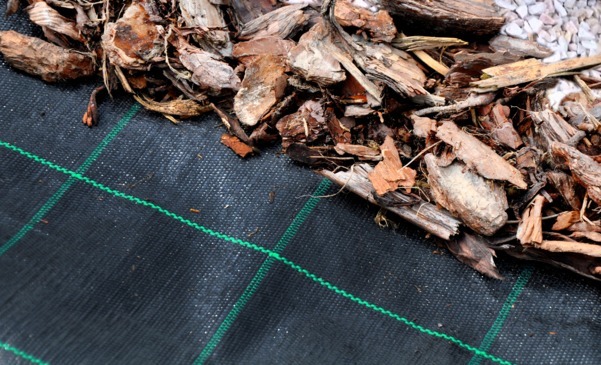
Checked agrotextiles are very popular in professional cultivation and horticulture for good reason – the key difference comes down to the production technology and weave construction.
1. Different weaving technology (loom)
The most important difference lies in the machinery used to produce both materials:
Checked fabric (flat looms/classic looms): It is produced on traditional, advanced flat looms. This allows for precise tensioning of the warp and weft, resulting in a highly repeatable and dimensionally stable fabric. Lined fabric (circular looms): Woven in a tube-like form on circular looms, this imposes different dynamics and tension on the fibers during weave attachment.
2. Material Density and Compactness
The difference in machine construction directly translates into the physical parameters of the finished product:
Higher density in checks: Fabrics from flat looms are significantly more compact. The strong, dense weave gives the checkered agrotextile greater hydraulic and mechanical resistance – it frays less when cut and better withstands loads (e.g., walking, moving pots).
Lower density in checks: Lined fabrics from circular looms typically have a slightly looser weave and do not achieve the same degree of fiber compaction, making them more susceptible to stretching and edge damage.
3. Practice in Gardening and Nursery
Easier Plant Spacing: A checkered print creates an even grid in both directions (X and Y), dramatically simplifying symmetrical spacing of pots, seedlings, and cuttings.
Single-Sided Lines: A print with only lines indicates the direction only along the roll, requiring additional measurement of distances across the roll.
In summary:
Checkered agrotextiles are superior in durability and density. Weaving on classic flat looms ensures the fibers are as dense as possible, while lined fabric woven on circular looms has a looser structure.
What mounting accessories best stabilize the fabric?
Jakie akcesoria montażowe najlepiej stabilizują tkaninę?
1. U-Shaped Metal Pins
Made of iron, they are used to permanently secure all types of fabrics and netting to the ground.
2. Plastic nails/pegs
Plastic nails, up to 20 cm long, are designed to secure the material to the ground. Their considerable length allows for deep penetration into the soil, ensuring high stability on slopes.
White or black fabric, which is better?
 GeoTerra white The cooling effect of WHITE fabric:
Using white fabrics reduces perceived temperature and creates a cooler environment, which promotes better plant growth. Reflecting light instead of heating the soil.
White agrotextiles – such as GeoTerra white – are specifically designed to reflect incident light back into the soil.
Soil warming with BLACK fabric:
Traditional black agrotextiles in spring "enable optimal soil warming," which promotes root system strengthening. Areas requiring spring warming: Using black fabric directly on the ground is highly recommended in spring. The black surface accumulates solar energy, enabling optimal soil warming, resulting in faster root system strengthening and accelerated plant growth.