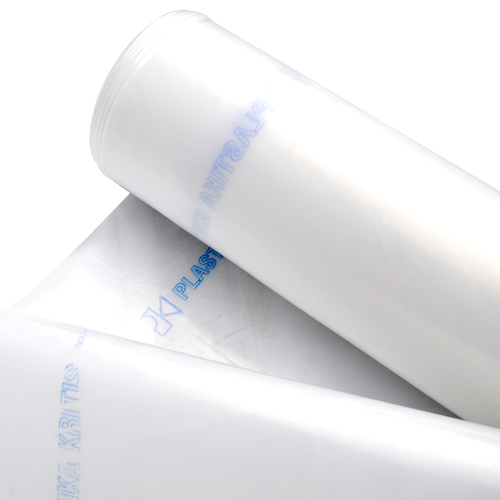


KRITIFIL® greenhouse films
KRITIFIL® greenhouse films
What to consider when choosing a gardening film?
When choosing a professional gardening film, it's important to consider not only the parameters themselves, but above all how they translate into daily use and the entire season. Which parameters are key in a gardening film for a greenhouse?
UV stabilization (UV4, UV6, UV8, UV10, UV12) determines the film's resistance to solar radiation. In practice, this determines how long the material will retain its properties and how many seasons it can be safely used without the risk of rapid wear.
The film's thickness (100–250 µm) affects its mechanical strength and resistance to damage. However, it's worth remembering that a thicker film doesn't always mean a better choice – in many cases, matching the film to the structure and operating conditions is more important than just this parameter.
Light properties determine how light reaches plants. A properly selected film can accelerate growth, improve color, or even out plant development, which directly impacts crop quality.
Technological additives such as EVA, an anti-condensation effect, and metallocene improve the film's functionality. Reduced water condensation, improved thermal insulation, and increased material durability translate into greater crop stability and fewer problems throughout the season.
In practice, a well-chosen film is one that is tailored to your crop, local conditions, and intended use—not just to a single parameter.
You can find more information on this topic, as well as practical advice, on our blog.
Not sure which film to choose?
If you're wondering which tunnel film to choose, it's best to start by discussing your crop and operating conditions.
At GEO Polska, we offer advice based on real-world applications—so that the solution proves effective not only at the beginning of the season, but also after several years of use.
PLASTIKA KRITIS has a unique flexibility in combining the above effects according to the climate of an area, the kinds of crop grown, the type of greenhouse and other specific factors, to form tailor-made films that are best suited to each customer's requirements. In addition, the minimum lot size per product for each dimension (thickness/width) in order to produce a tailor-made film is the smallest among large international agri-film producers, making it possible for our customers to minimize stock keeping and reduce their operating cost.